Wednesday, May 2, 2012

Meet Our Agents- Ginger Knowlton of Curtis Brown Ltd.


Posted in this series so far: Intro - Andrea Cascardi (Transatlantic)


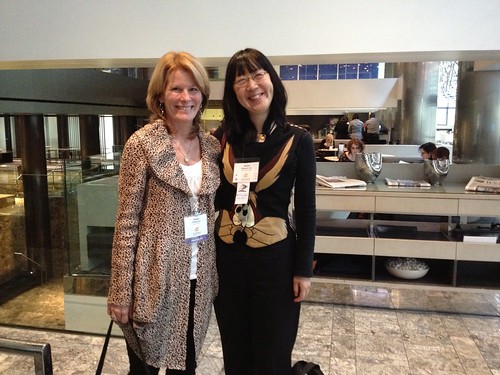
Today, Debbie Ridpath Ohi's agent, Ginger Knowlton of Curtis Brown Ltd, will be sharing with us. Ginger just finished negotiating two book contracts with Simon and Schuster Books For Young Readers for Debbie. Read about it here! Debbie's picture book, I'M BORED (written by Michael Ian Black, illustrated by Debbie) comes out this September and you can find out how it was created in the I'm Bored Scrapbook Journal.


Agency Website | Ginger's bio
Publisher's Marketplace
On Twitter: @gknowlton58 at @CurtisBrownLtd


MiGs: How many clients do you feel comfortable balancing?

Ginger: Such a question! I could say—that depends on the day and the time of day and the month and the time of month and the year and the time of year. Or I could say—all of mine. So that’s what I’ll say.


MiGs:  Do you think publishers will be increasing their lists or decreasing them this year?

Ginger: Are we talking about children’s books or all kinds of books? For children’s books, I imagine that there will be a bit of an increase, simply because more and more publishers are seeing how healthy the children’s book field is, and they’re jumping on the bandwagon.


MiGs:  What made you pick your very first client?

Ginger: I was working as Marilyn Marlow’s assistant at the time and we thought it might be good for me to start my agent career by representing illustrators, since Marilyn had so many picture book writers, and we were in the midst of a picture book boom at the time (in the late 80s). Laurel Molk and I have worked together since 1988, I think, and she is about to sign contracts to illustrate a graphic novel for First Second and a picture book for Holt.


MiGs: What makes an ideal client?

Ginger: I honestly think there are as many answers to that question as there are clients. Some attributes that I value are talent, honesty, trust, talent, a partnership mentality, forthrightness, talent, and faithfulness. And a sense of humor. Definitely a sense of humor helps. Did I mention talent?

MiGs: Of the most recent 100 queries you received from writers, how many did you accept as clients? (rough guess)

Ginger: Of the most recent 100, I believe the answer is 0. I am truly sorry that is the case.


MiGs:  What is one piece of typical writing advice that you think should go out the window?

Ginger: I don’t think it’s necessarily true in all cases that you should ‘write what you know’.


MiGs:  Do you read the query letter first or the sample pages?

Ginger: I tend to go right to the writing and read the query letter closely if I like the writing. But that’s not always the case.


MiGs:   What is one common misconception that inexperienced writers tend to have about agents?

Ginger: That agents will become irrelevant in this world of ebook publishing.


MiGs:   What is something people might not know about you?

Ginger: Wait. Did you get that question from the Miami conference? Let’s see — people may not know that I went to 13 different schools, including college, navy brat that I am. Really, 12, but I say 13 because of the two weeks I went to Vallejo High School as a junior before my parents moved me to St. Vincent’s.


MiGs:  What would you love to see in your query inbox right now? or What’s on your wish list?

Ginger: I want what I always want—a story that I. Can’t. Put. Down.


MiGs: Why did you become an agent?

Ginger: My dad asked me to move back east (‘to the civilized coast,’ he said) to work at Curtis Brown. My brother and sister were already working with him, and I guess he wanted to complete the kingdom. I was working with children in California, and I’ve always been an avid reader, so he thought I would be a good addition to the children’s book department.

MiGs:  What are your response times?

Ginger:  I am struggling with the email problem at the moment. I’m pretty fast when people submit to me via snail mail, but I know that’s a hassle and becoming obsolete. I do try to keep up with emailed submissions, but I need to establish a better system. (I also need more time.) I think it would help if authors put ‘query’ as the subject line. Also, if authors who query me don’t hear back within a month, please feel free to send a gentle nudge along with the original email. Please don’t send attachments unless I request it. I realize I haven’t really answered your question.


Next up: Marie Lamba of Jennifer DeChiara Literary Agency

Tuesday, May 1, 2012

Meet Our Agents- Andrea Cascardi of Transatlantic Literary Agency


Posted in this series so far: Intro 


Today Susan Laidlaw's agent, Andrea Cascardi of the Transatlantic Literary Agency, will be sharing with us. Andrea recently sold Susan's YA, INFIDEL IN PARADISE, to Tundra Books. Look for INFIDEL IN PARADISE to be released winter 2013!


Agency Website
Publisher's Marketplace
Twitter

MiGs: Why did you become an agent?

Cascardi: I wanted to continue working with writers but had decided to leave the corporate publishing world.

MiGs: What made you pick your very first client?

Cascardi: He picked me, actually. I had been his editor at Knopf and he was the one who asked, when I left, "are you thinking about being an agent?" I said "why, would you be looking for an agent?" And that's essentially how the decision was made.


MiGs: Of the most recent 100 queries you received from writers, how many did you accept as clients? (rough guess)

Cascardi: Of the most recent 100 queries, I'd say none. I have a very full list and I get a lot of queries, so the percentage of what I take is very very small.


MiGs: What is an ideal client?

Cascardi: Someone who understands that writing is creative but publishing is a business. Not everything that is well-written gets published. And a writer has to be prepared to help find the readers nowadays.

MiGs: What is one piece of typical writing advice you think should go out the window?

Cascardi: I don't tend to read writing advice so I can't answer that one.


MiGs: Do you read the query letter first or the sample pages?

Cascardi: I read the query first. If the query intrigues me, but it's not an area I represent, I won't read the first pages. But if my interest in the query and the area dovetail, I will go right to the sample pages or ask to see the full manuscript.


MiGs: What is one common misconception that inexperienced writers tend to have about agents?

Cascardi: That getting an agent is the holy grail-- the end of the rainbow. There's a lot of work that comes after one gets an agent, so be prepared to continue to hone your craft beyond that stage.


MiGs: What is something people might not know about you?

Cascardi: I love swing dancing.


MiGs:  What's on your wish list?

Cascardi: Romance, humor, and thrillers! Always with a geographical setting that is as strong as any character.


Next up: Debbie's agent, Ginger Knowlton of Curtis Brown Ltd.

Monday, April 30, 2012

Meet Our Agents

It's here! Our week long of interviews from our agents! As you can guess, we at the MiGs are huge fans of these four brilliant agents. And we figured you would love to hear what they have to say about books, publishing and agenting.


Please welcome our agents: Andrea Cascardi of the Transatlantic Literary Agency, Ginger Knowlton of the Curtis Brown Agency, Marie Lamba of the Jennifer DeChiara Literary Agency, and Jeff Ourvan of the Jennifer Lyons Literary Agency, LLC.

Here's the line-up:

Tuesday- Susan Laidlaw's agent: Andrea Cascardi of the Transatlantic Literary Agency


Andrea Cascardi has more than twenty years experience in book publishing. Beginning as an editorial assistant at Houghton Mifflin, she moved up the ranks at several major New York Publishing houses (including Scholastic, Crown/Random House and Hyperion) to become Assistant Publishing Director for Knopf and Crown Books for Young Readers before joining TLA. Among the award-winning authors and celebrities whose children’s books she edited are Faith Ringgold, Karen Hesse, Julia Alvarez, Raffi, Tim Burton, and Wendy Wasserstein. She also wrote two books for parents about choosing the best books, audio, and video for children, and reviewed children’s book for the Boston Parents’ Paper. Andrea has also taught children’s books publishing for master’s degree-level students at Pace University.


Wednesday- Debbie's agent: Ginger Knowlton of the Curtis Brown Agency


Ginger Knowlton represents authors and illustrators of children's books in all genres, as well as a few adult book authors. Her list includes Newbery Medalists, Newbery Honor and Printz Honor winners, Edgar and Lambda winners, a Sibert and Orbis Pictus winner, New York Times bestsellers, and a host of other delightful and talented clients. Ginger started working at Curtis Brown as an assistant to Marilyn Marlow, one of the first literary agents to specialize in children's books in the 1960s. Working for Marilyn was a rite of passage, affectionately referred to as Curtis Brown’s "Boot Camp." Before joining the company, Ginger worked in the field of early childhood education in Sacramento and Mendocino, California. She has served on the Board of Directors of the Association of Authors' Representatives and currently serves on the Board of Directors of the Friends of the Library in her hometown in Westchester County.

Thursday- Carmella's agent: Marie Lamba of the Jennifer DeChiara Literary Agency


Marie Lamba joined JDLA as an Associate Agent in 2011. She is the author of the young adult novel WHAT I MEANT . . . (Random House), and her work appears in the short story anthology LIAR LIAR (Mendacity Press) and the anthology CALL ME OKAASAN: ADVENTURES IN MULTICULTURAL MOTHERING (Wyatt-MacKenzie Publishing). Marie's articles appear in more than 100 publications, including national magazines such as Writer's Digest, Garden Design, and RWR. She has worked as an editor, an award-winning public relations writer, and a book publicist, has taught classes on novel writing and author promotion, and is a member of Romance Writers of America and The Liars Club.

Friday- Christina's agent: Jeff Ourvan of the Jennifer Lyons Literary Agency, LLC.


Jeff Ourvan, an attorney, published author and former editor, is a literary agent with the Jennifer Lyons Literary Agency. His interests are varied: he represents non-fiction works, especially memoirs, histories, biographies, international current events and sports. He also represents fiction works, particularly in the young adult, thriller and international fiction categories. Prior to his career as a literary agent, Jeff was a litigator for many years at two large New York-based corporate law firms; a communications consultant working in New York, Los Angeles and Tokyo; and an editor of Living Buddhism magazine. One of Jeff’s upcoming works, How To Coach Youth Baseball So Every Kid Wins, will be distributed by Norton in Spring 2012. Jeff is married to the novelist Jessica Jiji.

Monday, April 23, 2012

Next Week: Interviews With Our Agents From Transatlantic, Curtis Brown, Jennifer DeChiara and Jennifer Lyons


SUPER-EXCITING NEWS: Next week we're hosting interviews with our agents all week long, asking them some tough questions about the market, misconceptions, and what they are looking for in submissions and in their clients.

Here's the line-up for next week:

Mon. April 30: Mini-bios about each agent.
Tues. May 1st: Susan's agent: Andrea Cascardi of the Transatlantic Literary Agency.
Wed. May 2nd: Debbie's agent: Ginger Knowlton of Curtis Brown Ltd.
Thu. May 3rd: Carmella's agent: Marie Lamba of the Jennifer DeChiara Literary Agency.
Fri. May 4th: Christina's agent: Jeff Ourvan of the Jennifer Lyons Literary Agency, LLC.


Friday, April 20, 2012

Making Time for Observation To Enhance Your Writing

One of the reasons I like to start writing early in the morning is because my head isn't filled up with other thoughts about my job, my kids, my life in general or whatever else I'm stressing about.

But this morning I began with a walk (my dog was pleading with me). It's interesting how much sharper my powers of observation are during a morning walk, compared to when I walk in the late afternoon after work. I didn't bring my iPod this morning, I just walked and noticed. I saw the birds (including a flicker, which I haven't seen around here since last spring), interesting clouds, the sounds of traffic, other people setting off on their way to work, and even the dents in a passing car.

This short walk reminded me of how important it is to observe. Becoming more aware of the details around you in a space can only enhance your writing.

Have you made any time for observations this week?

Wednesday, April 18, 2012

Review Time! Punctuating Dialog Tags

In addition to being a writer, I'm also an editor. In the last few books I've edited or copyedited, I've noticed that the biggest grammar/punctuation issue newer authors struggle with is how to punctuate dialog tags. I started out thinking of how to write a "how-to" lesson, but then I thought, why learn it from me when you can learn it from some of my favorite authors? So here are snippets of dialog from some of my favorite books. Enjoy.

 Harry Potter and the Prisoner of Azkaban by J.K. Rowling:

"You know, I reckon Ron was right about you," Harry told Crookshanks suspiciously. "There are plenty of mice around this place, go and chase them. Go on," he added, nudging Crookshanks down the spiral staircase with his foot, "leave Scabbers alone."

 The bolding is mine. This is a perfect example of how to handle dialog tags in the middle of sentences. Because what comes before the first dialog tag is a complete sentence, there is a period after the tag (after the word suspiciously) and the continuing dialog starts with a capital letter. But the second dialog tag comes smack in the middle of a sentence, so there is a comma after foot, not a period, and the dialog continues with a lower case "leave."

Note that these are not action beats. Although some action is incorporated when Harry gives Crookshanks that gentle kick, the primary verb in the dialog tag is added. In other words, 'he added, nudging Crookshanks down the spiral staircase with his foot' is not a complete sentence. Otherwise we'd get different punctuation, as in this example:

Thud by Terry Pratchett:

Carrot nodded. "You have to understand about a dwarf mine."

If action is used instead of a dialog tag, and the action is a complete sentence, it ends in a period. It's a sentence. Period. Carrot nodded, "You have to understand ..." would be incorrect.

Another example from Thud, where there are more than two people conversing:

"Then get someone else to do it, dear," said Sybil.
"Can I do that?" said Vimes.
"Yes, sir," said Carrot. "You're in charge."

The point here is to use said whenever possible.

Terry Pratchett and J.K. Rowling are British. Stephen King is American, and his use of dialog tags strikes me as very American. Lots of action and very, very few adverbs. Because he writes horror, he also shows a lot of emotion in his dialog tags.

Desperation by Stephen King:

She turned to Ralph and spread her hands. "The obsessive Bible reading was bad enough, but this ... why didn't you tell me about this praying business?"
"Because it looked private." He shrugged, not meeting her eyes. "And it wasn't hurting anybody."

Note that each action beat used to indicate who's speaking is a complete sentence that ends in a period. In the last line, the action comes in the middle of Ralph's speech. Yet each and every sentence, even the first line of his dialog, is a complete sentence that ends in a period. Really, try to avoid shoving an action beat in the middle of a dialog sentence. Action beats are complete sentences, and splicing a complete sentence inside another complete sentence is punctuation anarchy.

So, if you ever want to know more about dialog tags, pick up your favorite novels. Just try not to get lost in them and remember to get back to your own writing.

-- Kate