Showing posts with label Andrea. Show all posts

Friday, June 29, 2012

The Challenges of Making Characters Come Alive

A secondary character can be a trusty sidekick. Or the quiet, mouse-like kid that needs protection. Or the bossy, bullying one that always seems to be listening in on the heroine’s plans. My secondary characters always seem to be full of personality. So much that they often threaten to steal the scenes away from my main character. And there’s my problem. Why is it that the main character is so much harder to bring to life than a secondary character?

You can start thinking about the main and secondary characters in the same way. They have strengths and flaws, personality traits, physical appearance, etc. But there’s a lot more pressure on a writer to create an engaging main character.

While the main character has to change and grow throughout the story, the secondary characters can just hang out and have fun, appear when they’re needed and disappear when their bit is over.

In a compelling story, the main character cares about something so much he or she will do anything to have it, and writer has to convince the reader that the wanting it is worth it. Secondary characters can care about it too, but it’s not like their world will end if they don’t have it.

One of the strategies for writing a compelling main character is to try to put yourself in the main character’s shoes. Oddly, what this helps me with is bringing to life my secondary characters. In real life, I’m always making observations about other people—their mannerisms, their emotions, their choices. When I create secondary characters, these details emerge naturally in my writing.

But when I’m standing in the main character’s shoes, I have to turn that same lens on myself. Analyze my own (or my main character’s) strengths and weaknesses. It’s so much harder. Especially since that main character is not quite me, but some made up version that is part me/part the-heroine-I’d-like-to-be/part the-person-whose-flaws-create-the-most-conflict.

The part that is me doesn’t really like probing into the sensitive stuff that I’d normally cover up so I don’t have to deal with it. The heroine part wants to…well, be a hero. She doesn’t want to think about her flaws and bad choices. And the flawed part of the character would rather not remind anyone of her shortcomings, even if they do help to create a good story.

All this makes it so difficult for me to create a main character that really comes alive for the reader.

What do you think is your biggest challenge in breathing life into your main character? Do you find it harder to create your main character or your secondary characters?

Friday, May 18, 2012

The Drive to Write

Untitled As I struggle to get further ahead in the writing and publishing process (I’m in the “find an agent” phase), there’s always a new hurdle to face. Most of them seem to be about what I need to learn to get where I want to be.

A lot of my learning is through revising my novels, and sometimes I get to a point where I feel like I just can’t put any more hours into a project. Especially when it seems that there’s still so much more revision work to be done. The questions I’m trying to address are huge, because they usually involve rethinking the whole novel:

“How do I make my character stay real through the whole story?"
“How will I change the tone of the novel to match the ideas behind the plot?”
“How can I work on the pacing to make the entire novel more compelling?

None of them are quick fixes I can pull off in a couple of hours. To make matters worse, sometimes I get to a point where I can’t even tell if the changes I’m making are an improvement. [Usually that’s the time to take a break.] Am I really learning anything?

The feeling of not getting anywhere can be overwhelming. This week I really appreciated Shannon Messenger’s honest vlog about how, even after she got her agent, she considered quitting: Shannon Messenger Takes the Truth

I've considered quitting more than once this year, but I always end up persevering. Why? Part of it is because of the people cheering me on – my writing buddies and my family. Part of it comes from those small signs that I’m making progress – requested revisions, feedback from my crit group or beta readers. But ultimately, it comes down to me. If I didn’t have the drive to continue, the outside support wouldn’t be enough.

Writing is so embedded in my life that I don’t think I could stop. I also really hate to give up on anything. I even have visions of going back to those drawer novels one day and fixing them up. I always feel like I know I can do it, and this latest revision might be the one that helps me move closer towards my goal.

Friday, April 20, 2012

Making Time for Observation To Enhance Your Writing

One of the reasons I like to start writing early in the morning is because my head isn't filled up with other thoughts about my job, my kids, my life in general or whatever else I'm stressing about.

But this morning I began with a walk (my dog was pleading with me). It's interesting how much sharper my powers of observation are during a morning walk, compared to when I walk in the late afternoon after work. I didn't bring my iPod this morning, I just walked and noticed. I saw the birds (including a flicker, which I haven't seen around here since last spring), interesting clouds, the sounds of traffic, other people setting off on their way to work, and even the dents in a passing car.

This short walk reminded me of how important it is to observe. Becoming more aware of the details around you in a space can only enhance your writing.

Have you made any time for observations this week?

Friday, April 6, 2012

The Lifelong Influence of Good Children's Books


I was tidying up my office the other day and came across these:


I haven’t looked at any of these for a while but they still rank among my favourite books. They’ve always been part of my life. I remember going to the library many times as a child, signing them out or just sitting and reading my favourites. [My favourite is still The Tale of Two Bad Mice, but I also love The Tale of Peter Rabbit, The Tale of Benjamin Bunny, The Tale of the Flopsy Bunnies and The Tailor of Gloucester.] In high school, some of my friends and I even nicknamed one of our teachers "Puddleduck", after the character in The Tale of Jemima Puddleduck.

As an adult, I remember being thrilled to visit an exhibit about Beatrix Potter’s life and work, with her original sketches and paintings. My husband bought me the entire collection of the little books early in our marriage. And I “rediscovered” them again in reading them to my own daughters. On my bookshelves I have a biography as well as The Beatrix Potter Journal (a collection of letters, photographs, journal entries and art).

I think reading Beatrix Potter’s books and learning about her and her life planted the seed of my writing dream. Growing up, I was interested in drawing plants and tiny creatures from nature. And I made up stories about families of mice. The first novel I wrote was about tiny human-like people that live in a garden. It’s so interesting to see how the spirit and love of those tiny tales connects to so many different parts of my life and has influenced me as a writer.

-- Andrea

Thursday, March 15, 2012

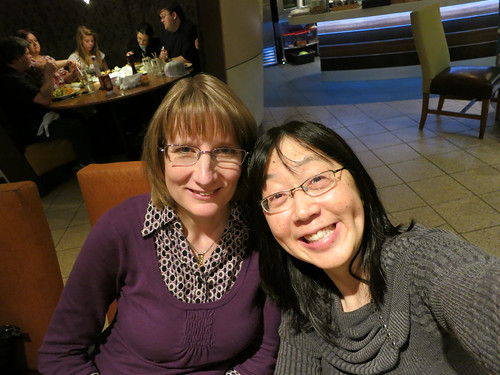
Debbie and Andrea finally meet in person!

Meeting middle grade author, Andrea Mack

I've been with the MiG Writers for a while now but so far, have only met one of my MiG pals in person: Carmella Van Vleet.

Yesterday, Andrea Mack and I finally met! E-mail and social media is great, but there's something about meeting people face-to-face that is so much more satisfying. Andrea just wrote about our get-together in her blog as well.

Andrea Mack browses my I'M BORED proofs

Screen Shot 2012 03 15 at 11 04 46 AM


Lots of talk about kid lit and writing and our amazing writing group. Andrea browsed my I'M BORED proofs. We had lots of dessert. :-)

Someday, it would wonderful if ALL the MiG writers could get together in person. Some of us are already planning to attend the SCBWI conference in NYC next January, which will be fun.

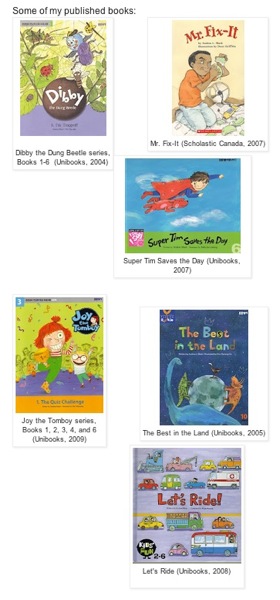
Anyway, do check out Andrea's blog for writers and readers, That's Another Story. You can see some of her published books to the left; click the image to be taken to her website.

Friday, February 24, 2012

Filling Up the Writing Well

When I was kid, for a while we lived in a house with a well. Water was something I hadn’t thought much about until then, it was just there when I turned on the tap. But in the short time we lived in that house, the well went dry a number of times. I remember going with my Dad to get the water truck, bringing it back to our house and filling up that well.

This week, my writing mind was kind of like that well. Empty. I tried scraping the bottom to squeeze out a little more writing water. I set timers. I doodled. I looked back over my notebook for ideas to inspire me. But free writing about nothing sometimes just gives you nothing. So I gave up. I decided not to waste my time and energy on thinking about it and instead, I spent my time on the other things that fill up my life. My kids. My dog. My work.

Sometimes, the inspiration runs dry, and you need a little time away from it to give the well a chance to fill up again. It’s funny how ideas trickle into that writing well when you’re not even looking.

Friday, January 27, 2012

Revising for Consistency

I’m one of those writers who has to get back into the story by revisiting parts of the book I’ve already written. When I do that, of course I make changes. So I’ve been through the First Half many more times than the Second Half. Somewhere in the middle of my novel there’s a fuzzy, transition zone and then suddenly I’m in the Second Half of the book, which in places seems to bear only a passing resemblance to the First Half. So now my challenge is to strengthen Second Half so that I end up with a seamless novel. At the moment, I'm tackling two different areas:

Story world. In First Half, where I’m still working on setting up the story world, I'm extra careful to include the right details. By the time I get to Second Half, suddenly my main character who's been raised in the wilderness since infancy knows how to read a clock. I don’t think so. To help with keeping the world consistent, I'm drawing sketches of buildings and maps, making lists of technology, foods, power sources, etc.
Voice. In First Half, I've worked hard to eliminate words like "but", "walked" and "looked" and to write from my character's perspective, making those interesting internal observations that she'd make. A Wordle on First Half shows me I’ve used the word “was” 18 times. In Second Half, I’ve used “was” 284 times!
Um...I think a little more work is needed.

-- Andrea

Friday, September 16, 2011

What Do You Read?

For my writing, I consider it essential to read the kinds of books I write. So, my bedside table is stacked with MG and YA novels (I don't write YA yet, but I like reading them). I tend to read these for enjoyment first, and then afterward, I occasionally think about elements that are related to the craft, like the voice, the language, the dialogue, or the way the story is constructed. I estimate that about 40% to 50% of what I've read over the past couple of years has been books for children.

I wonder what the librarians at my local branch library think of me, getting all these kids books on hold? Maybe they think I have 5 kids at home who read all the time!

My goal has been to immerse myself in the style, the voice, and the structure of the kinds of books I want to write. It has definitely paid off. I know my writing has become much stronger since I've started doing this. (And it's fun!)

In case you were wondering, outside of kidlit, I read "how-to" writing books (this is beginning to sound like an obsession), blog posts (about writing, of course), books for my teaching job, cookbooks, a quick scan of the daily newspaper, and some adult mysteries and chicklit because I do sometimes want to read about adults. I'm guessing this other reading has less impact on my writing, except for the writing-related nonfiction.

What do you read? How much impact do you think it has on your writing?

Friday, July 8, 2011

5 Tips for Revising a Novel

Like a rollercoaster ride, the revision process is full of ups and downs. One moment, it feels like everything is going well. The changes you're making are definitely making the story stronger. Then a few minutes later, doubts creep in. Is what I want to do even working? Have I really addressed the doubts of my critique buddies? Is this new plot direction going to work? What if it ruins what I already have?

Some signs you might want to rethink your revisions:

1. It feels like your character is running on a hamster wheel, going around and around and not getting anywhere. Remember, the tension and conflict should be increasing.

2. The scene you just reworked bears a striking ressemblance to another scene earlier in your novel.

3. You fall asleep while you're writing. Maybe there's a little too much of that description or interior dialogue?

4. A never-before-seen character or object appears in your novel just before the climax to help get your protagonist out of a tricky situation. If your setting isn't Hogwarts, you might be in trouble.

5. After reading your latest chapter, the reader has a clear image of how your main character slurps up ice cream, eating out all the chocolate bits first and licking whipping cream off the spoon, but has no idea how your character got away from the evil monster and ended up in the ice cream shop. Oops! Go get a real sundae and then get back to the keyboard to show those key plot events!

Do you have any great revision tips to help get through the process?

Friday, April 29, 2011

Revising the Ending

I've been trying to revise the ending of my middle grade novel because I want it to be really amazing. What I had before was okay, but not memorable enough. I'm working on making it stronger and I thought I'd share a couple of the questions I've been asking myself.

What does the reader want to happen? How much of that do I want to show the reader?

I think that part of creating an emotionally satisfying ending is to give the reader a lot of what they want to happen. That doesn't mean I have to do it in a straightforward way. I can throw in some unexpected twists. Since I write MG, I think my readers do want a mostly happy ending. They want the heroine come out as a winner and the bad guys get punished. The main character should mostly get what she wants.

Thinking this way also shows me which scenes will be most important to the reader. Those are the scenes I don't want to sum up in a few lines or rush through. I can create suspense and stretch out those scenes to build up more of an emotional impact.

What is the simplest ending that will work for my story?
I want to wrap up most of the the loose ends so the reader can feel the problems are resolved. Even though I'm throwing in some unexpected twists, I think the book will be strongest if it ends without too much complexity.
After all, if the route to the final scene is too convoluted, the reader will get caught up in following the thought process instead of the emotional experience.

What questions do you ask yourself when you're revising the ending?

Friday, April 1, 2011

Looking Back for Inspiration

Lately, I've been feeling like the revisions on my current novel are taking forever. Guess what? I checked my notes and discovered I started writing the first draft last March. So, I've actually only been working on this project for a year (plus probably a few months where the idea floated around in my head and on the pages of my notebook).

Wow! That's hardly any time compared to my first novel.  It took five years before I reached the feeling that I'd completed it, or didn't know what else to do. I must be learning something.

Sometimes it can be encouraging to step back and look at the bigger picture. I often get caught up in the day-to-day details of writing, which have so many ups and downs. Sometimes a lot of downs. But a little over a year seems pretty reasonable for writing and revising a novel. Now I'm inspired to get my revisions finished!

Here are my goals for April:

1. Finish revisions on Novel #4.

2. Polish Novel #4. The feedback I'm getting from critique buddies suggests it might be ready to start subbing soon.

3. Write a query, pitch sentence and synopsis for Novel #4.

4. Oh yeah. And definitely decide on which title I'm going to use.

How is your writing project coming along? Have you ever found inspiration from looking back at what you've accomplished? What goals do you have for the coming month?

Friday, March 25, 2011

Revision is All About Taking Risks

I don't think of myself as a risk-taker. I don't like roller coasters, I get anxious driving in new situations, and my idea of fun is to curl up under a cozy blanket with a good book. But when I'm revising, taking risks is almost a requirement if I want to make my story stronger.

Here are some of the big risks I've been taking in the last couple of weeks:

Cutting out good writing. It's scary, but sometimes parts of my book where I really loved the writing have to go. It feels like I'm taking a huge chance, not knowing if whatever I replace it with will be better. I can only do it if I comfort myself with the thought that all that good writing is in another version of the file and I can get it back if I need it.

[When I read the improved version, I know those elegantly-worded sections won't ever be coming back. My story doesn't need them.]

Changing the beginning. Messing with the opening paragraph (actually, the whole first chapter) makes me nervous, especially when my crit partners didn't find much wrong with it. Since the first chapter sets the tone for the whole novel, these changes spill over into later chapters, gathering momentum, and I soon find that more and more changes are needed. Aack!

[When I come back and read it later, I realize the changes aren't as big and overwhelming as I thought. My words still capture what I originally envisioned. Sigh of relief.]

Taking out drama. I tend to throw a lot of obstacles at my protagonist, sometimes several in one chapter. I'm learning that too much drama doesn't give the reader a clear emotion to focus on. Cutting out action still worries me. Will the story be exciting enough? Will it hold my reader's attention? Should I risk it? I have to start small, reminding myself that it doesn't hurt to try. I can always put it back the way it was if it doesn't work out. What's few more hours of writing, anyway?

[My 11-year-old decided to re-read the early version of my story this week and commented that a lot of the story events happen "just in time" and it seemed unrealistic. Huh. Maybe there will be some benefit to losing some of the drama.]

It's hard work, but I'm learning to take more risks as a writer. One of the bonuses is that it stretches my mind in entirely new directions. I've stumbled onto a few great ideas which I know will improve the story.

What risks have you taken lately in your writing?

Friday, February 11, 2011

Investing in Your Writing

I’ve been thinking lately about what I mean when I call myself a writer. It’s not just about writing stuff when I get a chance. It’s about making an investment in myself, knowing that I'll be improving my writing. What kind of investment do I mean?

1. Making the time. Can you truly call yourself a writer if you don’t spend much time writing? It’s hard, but setting aside that time is about you telling yourself your writing is important. Slug through the hard parts and finish your project. Set aside some time to actually write.

2. Learning about the craft. They say you can improve your writing just by doing it. (Isn’t that cool? But see point #1.) Even more improvement can come by reading the work of other writers to see how they do things. And by finding out your weak points and learning more about them (now you know why I’ve been visiting The Plot Whisperer).

3. Going to Conferences. Okay, they are expensive and not for everyone (I haven’t been to one yet). It’s hard to ignore the benefits though. So much happens there that can’t be captured in a buddy’s blog post... all the great, inspiring stuff. And I keep hearing about people that get great agent and editor contacts, too.

4. Sending out queries. I have to admit I haven’t been so great about doing this. I’ll send out a few, then get some rejections. So I assume something is wrong with my novel and set it aside (because by then I’m already working on another one). Those queries aren’t always just about trying to get published. They are about you saying you are taking steps to reach your goal. No one will ever see your book if you don’t let them know it exists, right?

Investing in your writing is a way to say you believe in yourself.

How do you invest in your writing?

Friday, January 21, 2011

Getting Out of the Zero-Word Zone

January is often a month when you vow to change your life or reach toward a new goal. How’s that going for you? I’m finding it hard to buckle down and get writing. I’ve just finished revisions on one book, and, while I’m collecting critiques on that one, I’m toying with moving on to another. But I haven’t. I even have a good plan in mind. So what’s stopping me?

I’m getting pretty good at thinking up excuses. First it was the report cards I had to write for my day job. Then there was the new blog feature I started (ABC’s of Writing for Middle Graders over at That's Another Story). And a family weekend we took. Catching up after the family weekend. Critiques I owe. And then…well, you know how it is. Excuses are easy to dream up. What’s not easy, it seems is getting back to a regular writing routine.

What’s your best excuse for not writing? 'Cause I’m getting tapped out. I guess tomorrow I’ll actually have to do it. Just pick a place and start. Even a few words is better than zero.

-- Andrea

Friday, November 12, 2010

How to Handle Rejection

I try not to let it get me down, but sometimes it does. Even though I've been pretending ever since I sent out my query letters that it doesn't matter so much. I can always write another novel (yeah, in another four years). Here are some thoughts about how to ease the sting of a rejection:

1. Do something creative with the rejection letters, like give them to your new puppy and see what he thinks about it.

2. Read blogs about rejection written by other writers. It helps to know there are others out there feeling the same way.

3. Twizzlers. Chocolate. Whatever. Treat yourself to something delicious.

4. Send out more queries. One letter is just one person's opinion.

Actually, the thing that works best for me is to immerse myself in a new and even better writing project. I'll go back and fix up the rejected one someday, but the more writing I do, the more my writing will improve (especially with my awesome critique buddies to give me feedback). The next book I write could be The One.

What's your best tip for dealing with rejections?

-- Andrea

Friday, November 5, 2010

Creating Believable Motivation for Middle Grade Characters

Motivation. If you don’t have it, you’re not getting anything done. And if your character doesn’t have it, your story isn’t going anywhere. One of the difficulties I have in writing middle grade fiction is in getting the right motivation for my characters.

A character’s motivation has to be believable. For middle grade, that means you need to know what 9- to 12-year-olds want or what’s important to them. There are lots of writing books that give you advice on how to do that. But I think you also need to know two more things:

1) what middle graders think they can do

2) what they are able to do

These often don’t match up, which is a good thing, because it can create conflict in your story. But if either of them is too unrealistic, you run the risk of setting up a situation that won’t be believable for your readers.

I’ve noticed that sometimes middle graders seem to have a kind of naïve confidence, where they are sure something will be a piece of cake and then find out it’s not. Like when they’ve seen an adult do something lots of times, then try it themselves, and realize it’s a lot harder than they thought. Do they give up? Or do they try harder? There’s some motivation and conflict.

On the other hand, sometimes adults or older siblings underestimate what kids can do. For example, my 11-year-old shows much more initiative and independence when her older sister isn’t around. To a point. There are things she wouldn’t be able to do and knows it. But there are other things she’ll try because she thinks she can. There’s a lot of “trying it out to see what happens” with middle graders.

As an adult writing for children, it’s hard to shut out the perspective of "knowing myself" that comes from having so many more life experiences. But I think it’s important to try. To get the motivation right, I’m going to delve into the minds of my characters and work on what they think they are able to do, then show whether they can as the story develops.

-- Andrea

Friday, October 15, 2010

Birthdays and Character Development

Since it’s my birthday today, I’ve been thinking about the significance of birthdays in books and children's lives.

In my kindergarten classroom, birthdays are huge. They are a source of power, e.g. “I’m not going to invite you to my birthday”, and conflict, e.g. “I don’t want to come if there’s a clown.” The child who has a birthday loves to feel the attention that’s showered on them on their special day, not to mention the cake and presents.

As kids get older, they develop some birthday savvy. They might invite kids they barely play with to their parties to get more presents. Or they might bargain for not having a party if they can have a bigger gift. With teens, I’ve noticed that a birthday “party” could be as apparently ordinary as a shopping trip to the mall.

I’ve never thought much about my character’s birthdays, but given how important they are to kids, I should. In fact, the day a child is born turns out to be pretty important in my latest novel because that’s the day a decision is made about where a character is going to grow up.

Have you ever given your character a birthday party? How important are birthdays in your characters' lives?

-- Andrea

Friday, September 24, 2010

Making the Most What (Little) Time You've Got

My mind is on time management today, thanks to Debbie’s awesome post about how she manages to juggle her many projects. I have lots to juggle too, but it’s mostly my busy life -- two kids and their many activities, a part-time job, a dog , a husband and cable T.V. Possibly that’s why my writing progress often seems so slow [see my blog post here].

For me, writing gets about two hours a day, between getting ready for work and driving my kids places. Sometimes I get some “bonus time” on weekends or when everyone is watching a show I don’t like (but by the evening, I’m pretty tired so slumping down in front of the T.V. often wins out). I feel lucky to have my two hours, because I know that if I worked full-time, that would disappear. Even so, two hours can speed by pretty fast. Here’s how I make the most of it:

1. I actually use the two hours for writing. I do blog and read writing-related blogs, but I do it at another time (usually in the morning before the kids are up – I’m up at 6 a.m.; 5 a.m. if my husband is rowing). Same with critiques. I try to fit them in at other times, or maybe once a week. I try not to answer the phone. Otherwise, my whole writing time would disappear.

2. I try to write every day. This helps me stay connected to my story. Otherwise, I’d spend most of my writing time getting back into it.

3. I work on only one of my own writing projects at a time. I’d love to be developing some of the great ideas I have for my next novel, but I find that I’m mentally spread too thin if I think about more than one project at a time. I’d never finish anything. I also do a few educational writing projects, and sometimes I have to put my own writing aside to work on them.

4. I write everything down. I use a notebook to record thoughts about my writing. If I didn’t, they’d disappear. I’m also a list maker. I keep a list of what I need to do for my job, a list of what I need to do at home, a list of ideas for blog posts….Can’t you just picture my desk?

5. I read in every spare moment. There aren’t many of those, but if I’m eating lunch at home by myself, I read. If I have to wait for the kids to finish an activity, I bring a book. Before I go to sleep, more reading.

-- Andrea

Friday, September 10, 2010

The Scrutiny of the Teenaged Critic

My writing has grown up with my children. When they were little, they loved my picture books, which often featured them as main characters. It was fun to see them so excited about my writing. Then came the early readers, centred around their interests. They weren’t as concerned about being the stars of the stories, but they did begin to voice their opinions, telling me what they liked and didn’t like. Now that I’m writing middle grade novels, they’ve become teenagers, and my most valuable –and harshest—critics. They tell me:

- when they don’t connect with a character

- when the dialogue doesn’t work or isn’t what a kid would say

- when I need to fix a huge plot hole that’s implausible to them

- when they don’t understand the logic or what is happening in the story

These kinds of comments are all a great help. In fact, my latest manuscript is filled with pencilled in comments. Giant question marks. Underlining with notes that say “This sentence is awkward” or “This character’s a girl?” or “Not presented in the right POV.” They’ve become so picky, I’m beginning to think I liked it better when they were five and just said they liked it. Where did they learn all this stuff? Possibly I’ve raised two future editors. Of course, it’s not quite as helpful when they tell me:

- they don’t like a character’s name because it reminds them of someone they don’t like

- in a slightly sarcastic tone, “Since when?” or “I don’t think so.”

- "This whole story would never happen this way, you know" (trying to be kind)

- to hurry up and finish writing because they want to use the computer

As teenagers, they are begging me to write YA. I shudder to think what they’d say if I did. But I think I’ve found my niche. I am so over writing to please them, I’m sticking with middle grade. (Though I’m hoping that they will at least finish reading the book without throwing it down and saying “When are you going to write something normal?”)

-- Andrea

Friday, September 3, 2010

Fine Tuning Your One-Sentence Pitch

Lately, I’ve noticed a lot of blog contests that involve crafting a one-sentence pitch for your novel. We even had one here! Writing one of these is a challenging process, and you can find lots of how-to’s in the online writing community. But until yesterday, I’d never entered one of these contests.

After the mad scramble to get my entry in, I read through the other pitches. What I noticed:

1. If a one-line summary is too general, it doesn’t capture my interest. It needs some specific details about the conflict or story characters. But too much detail makes it hard to read. I try to avoid long explanatory phrases or multi-hyphenated descriptions.

2. It gives you an idea of the kinds of stories other people are writing. If you were writing in a popular genre, e.g. a YA paranormal, your own summary would really have to sizzle. Some summaries stand out just because they reflect a different type of story.

3. My own one-sentence summary could use some fine tuning. In the company of others, it was easier to see where it didn’t read quite right, or where it needed a bit of clarification or a little spark. This is the hardest part – trying to give it a little bit of sparkle when it’s so short!

-- Andrea